Crusader Kings III: Silk & Silver Merchant Getting Started
Open a landless trading company and turn surplus into dynasty power.
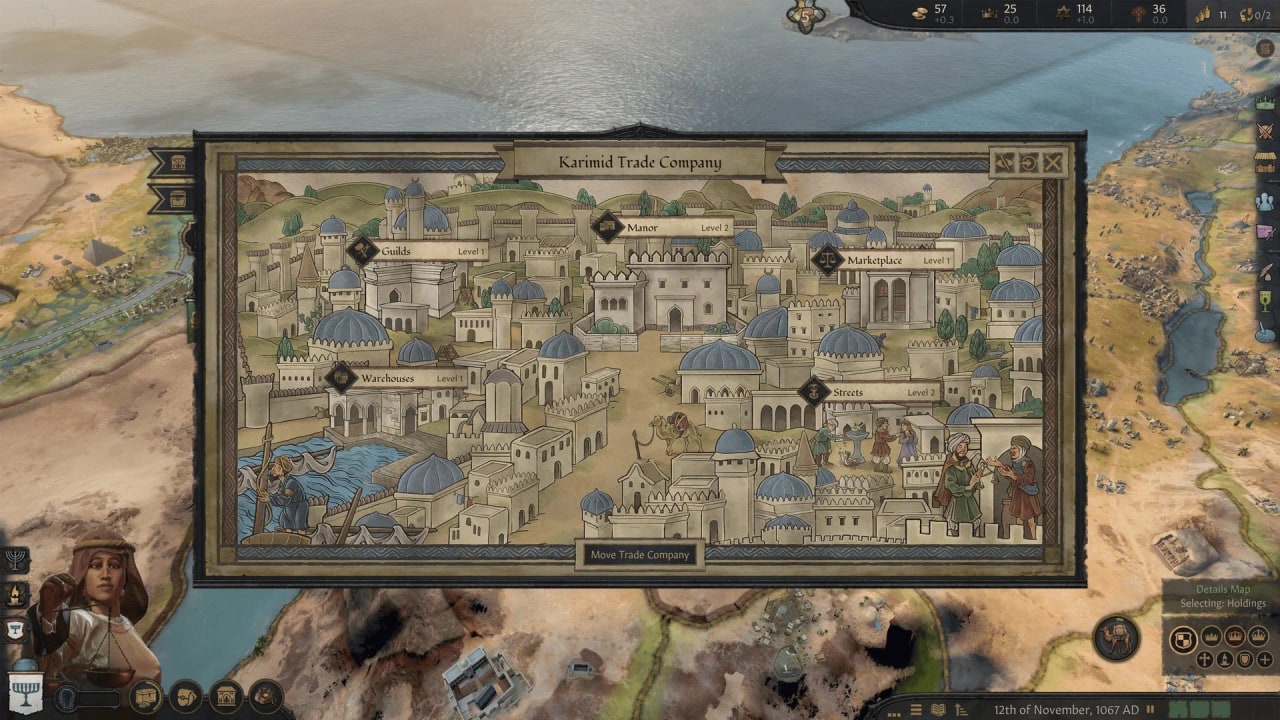
Crusader Kings III: Silk & Silver lets you lead a landless merchant family instead of a feudal realm. Your power comes from a trade company, Profit Routes, Patron politics, and Acumen earned from moving goods. This guide walks through how to start, what to do in the first decade, and how to grow from an Aspiring Business into a Trade Empire without stalling on Prestige or eviction risk.
Silk & Silver released on 17 November 2026 for $29.99 and is included in Chapter V. You need the expansion to play Merchants. The markets, trade goods, roads, and district economy underneath them arrive free for every Crusader Kings III owner in update 1.21 Florin. Read economy and districts if buildings suddenly demand goods you have never stocked before.
Ways to become a Merchant
You can enter the merchant life in several ways:
- Pick a historical merchant in the 1066 Channels of Commerce bookmark.
- Create a custom Merchant in the Ruler Designer.
- Select an existing merchant character on other start dates.
- Take the Become Merchant decision when your culture supports it.
- Accept sponsorship when a landed ruler funds a courtier as their personal merchant.
Your company sits in a county. Whoever holds that county becomes your Patron. The Patron takes a cut of trade income, can grant Charters, and can also evict you, so early Opinion management is mandatory.
First ten years checklist
- Choose a Company Purpose. New companies begin as Traders. Stay there until you understand Markets, then switch once for free into Artisan, Creditor, or Caravaneer. Details and rankings live on the merchant paths tier list.
- Run the opening scheme to win over your Patron. Charters and eviction immunity matter more than a slightly better early route.
- Open one Profit Route that must stop in your home Market. Buy surplus, sell deficit, and set a Primary Good that matches your starting Trade Expertise.
- Assign a Trader so Trade Opportunity contracts can appear.
- Save Prestige. Company Size upgrades and many domicile buildings cost Prestige as well as Gold, and Merchants earn Prestige more slowly than landed nobles.
Company Purposes at a glance
- Trader — balanced +10% expertise across categories, strong Patron Opinion, free first switch.
- Artisan — boosts luxury craft goods, Craft Artifact decision, cheaper domicile buildings.
- Creditor — moneylending focus, Seize Realm casus belli, Strong Hooks when rulers beg for loans.
- Caravaneer — long multi-market routes, no different-culture Opinion penalties, Merchant trait experience on long routes.
After the free switch, changing Purpose costs Prestige and sits on a multi-year cooldown. Any Merchant can lend gold, but Creditor makes debt the center of your strategy. Pair this page with trade routes before you re-spec.
Markets, Profit Routes, and early profit
Every de jure duchy has a Market. Holdings produce goods, local buildings consume them first, and the remainder becomes surplus or deficit. Your job is to connect those imbalances. Early route limits are tight: one Profit Route, a few Markets, one good, modest capacity, and limited length counted in provinces along roads, seas, and navigable rivers.
Prefer peaceful Markets with clear surplus at home and deficit within reach. Tolls apply to sales, not purchases, and usually start around a medium percentage. Avoid war-torn counties where raids and sieges wreck prices. When several companies trade the same good, Trade Competitiveness decides volume. Republics often outcompete young Merchants, so do not force a contested luxury good on day one.
Upgrade Townhouse, Warehouse, and Marketplace buildings to raise route count, goods per route, Markets per route, capacity, and competitiveness. Ledger and Storage upgrades pay for themselves quickly. Keep the trade goods tool open while you plan.
Acumen and Company Size
Acumen tracks lifetime trade gold. Spend Prestige to raise Company Size once thresholds are met. Larger sizes improve competitiveness, route length, and which ranks of ruler will grant Charters. Company Size also caps how far you can push the Townhouse, so growth gates growth. Aim for steady Acumen rather than constant Prestige dumping on vanity buildings.
Monopolies, rivals, and risks
Ask Market Owners for monopolies when Opinion and Expertise are high. A Strong Hook can force the deal. Complete or exploitative monopolies need a more Rapacious Company Direction and face harsh acceptance penalties. Competing in the same Markets damages House Relations and unlocks sabotage-style competitor contracts.
Watch eviction, forced moves that break every route tied to your home Market, and the hard rule that Merchants cannot raise Men-at-Arms. Use loans, Hooks, and your Patron instead of armies. When you are ready to leave the merchant life, buying land can turn you into a Republic — covered in the republic guide.
Recommended next reads
- Trade routes guide for route planner math and Traders.
- Best starts for strong openings.
- Patch 1.21 Florin for free-economy context.
- System requirements if performance dips after the economy overhaul.
Play the long game: one clean route, a friendly Patron, and Prestige in the bank beat three half-broken luxury lines.
Frequently Asked Questions
Quick answers about Silk & Silver merchants, republics, and trade.
Do I need Silk & Silver to play a Merchant?
Yes. Merchants exist in the 1.21 world, but playing one requires the Silk & Silver expansion.
Which Company Purpose is best for a first run?
Stay Trader while learning. You keep broad expertise bonuses and Patron Opinion, then switch once for free into Artisan, Creditor, or Caravaneer.
Why is my Profit Route suspended?
It no longer meets requirements — usually it no longer stops in your home Market, or length exceeded your current Route Length bonuses after a move or building loss.
Can Merchants raise armies?
No Men-at-Arms recruitment. Survive with Patrons, loans, Hooks, Trade Leagues later, or by buying into a Republic.