Crusader Kings III: Silk & Silver Trade Routes & Markets
Buy surplus, sell deficit, and lock Markets before rivals do.
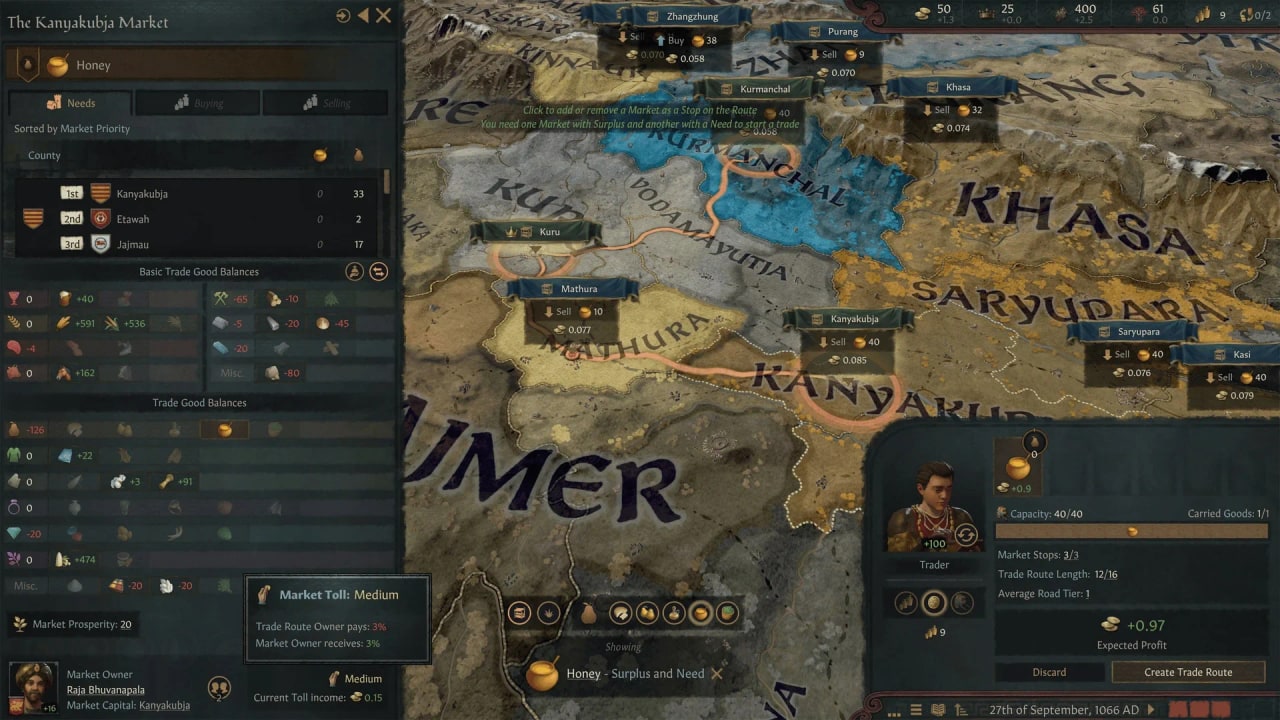
Profit Routes are the heartbeat of Crusader Kings III: Silk & Silver. Roughly 922 duchy Markets and about 44 trade goods create a map-wide ledger of surplus and deficit. This guide shows how to plan routes, beat tolls and competitiveness, use Traders, and decide when a monopoly is worth the gold.
You do not need perfect spreadsheet play on day one. You need one legal route that stops in your home Market, a Primary Good that builds Expertise, and the discipline to upgrade Warehouse and Marketplace buildings before opening five mediocre lines. Pair this page with merchant getting started and the trade goods tool.
How Markets work
Each de jure duchy hosts a Market. Holdings produce goods; buildings consume needs first; leftovers become surplus or shortfalls become deficit. Prosperity trends with county prosperity. Dev guidance is simple: buy where Markets struggle and sell where buyers have money. Raids, sieges, and corruption disrupt trade — buy prices rise, sell prices fall — so route around active wars.
Market Owners set tolls on a short ladder from none to very high. Default medium tolls commonly sit around a few percent of sales. Tolls hit sales, never purchases. Direct subjects of the Market Owner often pay none, and you can negotiate temporary Toll Exceptions through Trade Opportunity contracts.
Building a Profit Route
- Include your home Market. Merchant routes must stop there.
- Find a surplus/deficit pair within Route Length.
- Check Prosperity and tolls on the sell side.
- Set the Primary Good carefully — it drives Trade Expertise and route age modifiers.
- Avoid constant edits; changing goods can cost Prestige and reset entrenched bonuses.
Early caps are intentionally tight: few Markets per route, few goods, limited capacity, and length measured in provinces where sea zones and navigable rivers count as steps. Raise caps with Townhouse, Warehouse, Marketplace, Company Size, roads, innovations, and later Trade League perks. Republics often enjoy stronger baseline competitiveness, so Merchants should specialize instead of mirroring every civic route.
Roads and length
Routes travel roads. Traffic raises road tiers, and higher tiers extend effective Route Length. Neglected roads decay. Busy corridors become strategic infrastructure you should defend politically even if you cannot garrison them with Men-at-Arms as a Merchant.
Traders and contracts
Assign one Trader per Profit Route. Focus modes emphasize competitiveness, Expertise growth, or capacity depending on the Trader’s skills. Routes with Traders generate Trade Opportunities such as Negotiate Tolls, Encourage Investment, Secure Buyers, or Promote Goods. Failures can punish Opinion for years, so match contract difficulty to the character you send.
Commission Routes are separate jobs landed rulers offer to move goods between Markets for pay. They are useful income and reputation tools, but they can also restrict company moves until finished.
Competitiveness and rivals
When multiple routes trade the same good in one Market, Trade Competitiveness allocates volume. Challenging a rival damages House Relations and unlocks competitor contracts: raise your edge, sabotage theirs, or disrupt Charters. Mergers happen through peaceful offers or hostile takeovers that seize artifacts, Charters, and temporary competitiveness bonuses.
Monopolies
Petition the Market Owner for a monopoly on a goods category. Acceptance leans on Opinion and Expertise; Strong Hooks can guarantee success. Complete monopolies cover every good in a Market and remove lesser monopolies, while exploitative monopolies let you buy before local buildings are fed. Both harsher forms demand a Rapacious Company Direction and face steep acceptance penalties. Owners can later cancel monopolies for Prestige at a relationship cost.
Route troubleshooting
- Suspended route: home Market missing, length illegal, or requirements broken after a move.
- Low profit: bad Prosperity pair, high tolls, or competitiveness starvation.
- Prestige drought: stop re-editing goods and delay vanity domicile upgrades.
- Eviction scare: improve Patron Opinion, secure Hooks, or prepare a planned move before routes multiply.
Related pages
- Economy and districts — why buildings suddenly need goods.
- Merchant paths — which Purpose fits your corridor.
- Republic guide — civic competitors and league partners.
- Updates hub — balance changes after launch.
Master one corridor, then expand. Silk & Silver rewards nested routes more than random worldwide spaghetti.
Frequently Asked Questions
Quick answers about Silk & Silver merchants, republics, and trade.
How many Markets exist in Silk & Silver?
About 922 Markets — one per de jure duchy — according to Paradox's trade design and live 1.21 documentation.
Do tolls apply when I buy goods?
No. Tolls apply to sales on Profit Routes. Purchases are untolled, though war and corruption still warp prices.
How many goods can one route carry?
You start with one good per route. Warehouse upgrades raise the cap toward six.
Why do Republics beat my volume?
Republics often have higher Trade Competitiveness. Specialize goods, improve Marketplace buildings, and seek monopolies instead of copying their entire basket.